 By Savedollars Team
 The Subscription Fatigue Crisis
Consumers and businesses in 2026 are experiencing massive SaaS subscription fatigue. Paying $19 to $49 every single month for specialized utilities—like invoice generators, kanban boards, macro counters, or PDF organizers—has become economically absurd. When users cancel their subscriptions, cloud vendors cut off access to their own data.
This backlash has triggered one of the fastest-growing software movements of the decade: Local-First Micro SaaS. Instead of hosting complex multi-tenant backends on AWS or Vercel, developers are building and selling browser-executable, standalone web apps that run 100% on the client’s machine.
What is a “Zero-Server” Micro SaaS?
A Zero-Server Micro SaaS is an application distributed as a static single-file web app (HTML/CSS/JS) or lightweight PWA. It requires:
- Zero Backend Infrastructure: No EC2 instances, no serverless cold starts, no database hosting bills.
- Zero Marginal Cost per User: Whether you serve 10 customers or 100,000 customers, your hosting overhead is exactly $0 (hosted on free CDN edge nodes like Cloudflare Pages or GitHub Pages).
- 100% Privacy by Design: User data never leaves their local browser storage, making compliance with GDPR, HIPAA, and CCPA automatic.
Entrepreneurs seeking to enter this market can bypass months of trial-and-error by deploying verified single-file architectures from the 100 Micro SaaS Web Apps Suite, which includes full source codebases with persistent local storage.
The Technical Primitives of Local-First Architecture
Building high-performing client-side software requires mastering three modern browser APIs:
1. IndexedDB with Dexie.js for State Persistence
Unlike fragile localStorage (which is limited to 5MB and blocks the main thread), IndexedDB provides an asynchronous, transactional, NoSQL database capable of storing hundreds of gigabytes of structured client data directly on disk.
2. WebCrypto API for Zero-Knowledge Security
To assure enterprise clients that sensitive records remain confidential, local apps employ the native window.crypto.subtle API. Using AES-GCM 256-bit client-side encryption derived from a user password, all saved records are encrypted before touching disk.
3. Client-Side Vector PDF & File Serialization
Instead of spawning headless Chrome servers on AWS to render invoices or reports, local web apps leverage client-side vector engines like jsPDF and html2canvas, generating pristine, print-ready documents in milliseconds.
The Unit Economics of Lifetime Digital Software
Consider the math comparing traditional cloud SaaS to Local-First Micro SaaS:
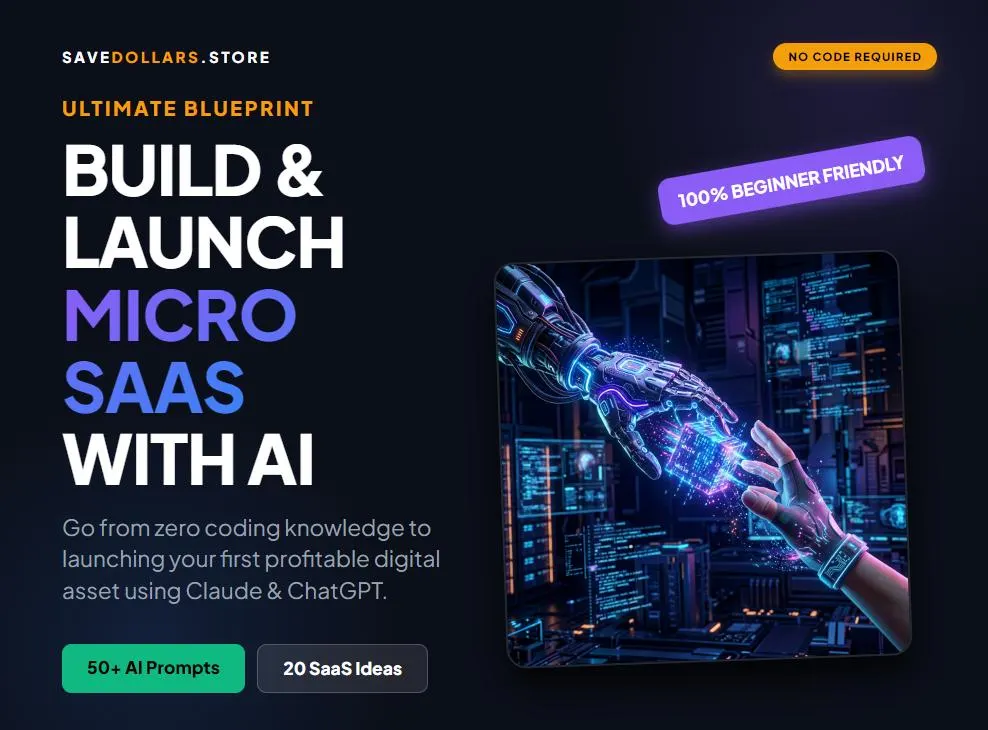
For founders looking to engineer and launch their own portfolio of browser software, the Build Micro SaaS with AI Blueprint provides the exact software generator prompts and product packaging playbooks to launch in under 48 hours.
⚡ Verified Architecture
⭐⭐⭐⭐⭐ 100% Offline & Private
Build Micro SaaS with AI | No-Code Software Builder & Prompt Library
Step-by-step roadmap to building and monetizing browser-executable software without servers, recurring cloud bills, or venture capital.
Build Micro SaaS with AI | No-Code Software Builder & Prompt Library
Step-by-step architectural roadmap to building and monetizing browser-executable software without servers, recurring cloud bills, or venture capital.
The Path Forward for Indie Developers
The golden era of subscription-bloated SaaS is shifting toward lean, sovereign software. By giving users perpetual ownership, instant client-side performance, and absolute privacy, solo developers in 2026 can build sustainable, highly profitable digital software empires with literally zero infrastructure overhead.